

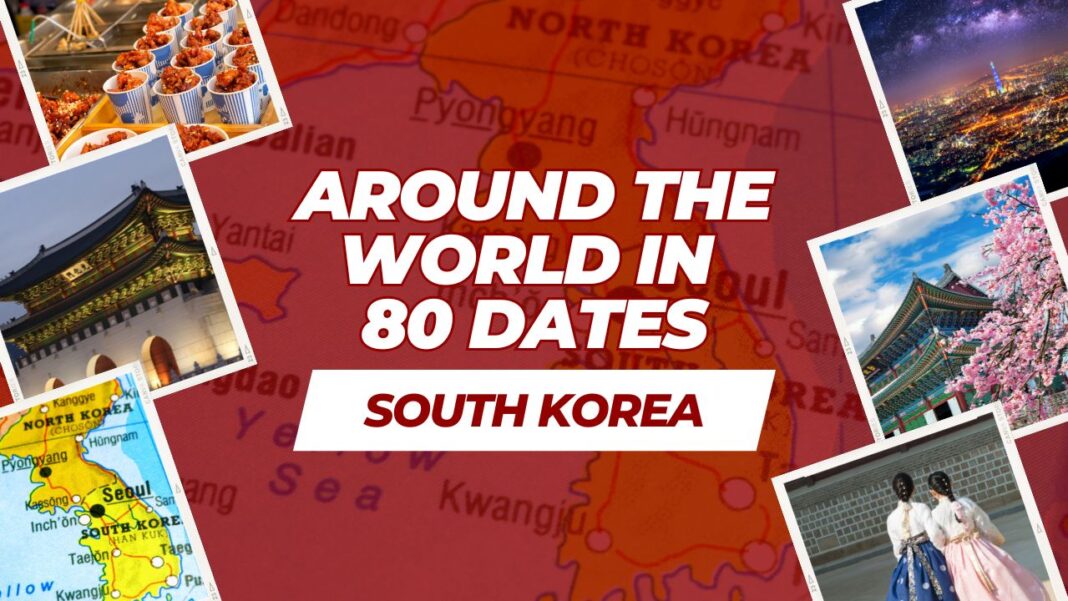
Introduction: Romance at Seoul Speed
Dating in South Korea brings together two seemingly opposite qualities: the restless energy of a highly connected society and a fondness for carefully marked romantic moments. A relationship might begin through an introduction arranged by friends, develop through rapid exchanges on KakaoTalk and then be celebrated with matching accessories, photographs and a meticulously planned 100-day anniversary. That combination of speed and sentiment makes South Korean romance particularly fascinating.
International audiences often encounter Korean love through television dramas, films, music videos and celebrity news. These can capture recognisable details, from late-night walks beside the Han River to emotionally significant confessions, but real relationships are naturally more varied. Not every Korean dater expects cinematic gestures, coordinated outfits or constant messages. Personalities, generations, regions, religions and lifestyles all shape the experience. Dating in Seoul may feel different from dating in Busan, Jeju or a smaller provincial city, just as university relationships can differ from those formed by established professionals.
What does remain distinctive is the amount of cultural vocabulary surrounding romance. A friend-arranged introduction is known as a sogaeting. The uncertain stage when two people clearly like one another but have not officially become a couple is often described as sseom. A direct declaration of feelings can turn that ambiguity into a recognised relationship. Dates, anniversaries and small gifts may then provide a visible rhythm to the courtship.
South Korea therefore offers much more than a collection of picturesque date locations. Its romantic culture reveals how people balance family expectations with independence, inherited etiquette with changing gender roles, and private feelings with a society that enjoys giving love its own milestones. As part of Around the World In 80 Dates, we explore what newcomers should understand before arranging a coffee, downloading a Korean dating app or attempting that first meaningful phrase.
The most useful approach is curiosity without assumptions. Korean dating customs can help an international dater recognise important signals, but no custom replaces an honest conversation. Ask what your date prefers, notice how formally they communicate and allow the relationship to find its own pace. That mixture of cultural awareness and individual respect is the best starting point for romance anywhere, including one of Asia’s most dynamic dating destinations.
Love and Dating Culture
Introductions, attraction and becoming official
Friendship networks continue to play an important role in South Korean dating. A sogaeting, usually arranged by a mutual friend, introduces two single people who are thought to be compatible. The meeting often takes place in a café or restaurant, giving both people a relatively comfortable way to assess the chemistry. Because someone trusted has made the introduction, it can feel less anonymous than meeting a complete stranger. Group introductions, workplace connections, university circles and hobby communities also create opportunities, while apps have broadened the possibilities considerably.
The progression from mutual interest to an official relationship can be more clearly defined than some British daters expect. During the sseom stage, two people may message regularly, flirt and meet privately while still avoiding the boyfriend or girlfriend label. A gobaek, or confession of romantic feelings, may establish whether they are formally together. It need not be a grand speech beneath falling blossom. A straightforward question about becoming a couple can be enough. The important point is that assumptions are risky. Exclusivity, seriousness and labels should be discussed rather than guessed.
Age, language and everyday etiquette
Age can enter conversation relatively early because it helps Korean speakers choose appropriate speech levels. Many people begin with polite language, known as jondaetmal, before agreeing to use the more familiar banmal. Moving too quickly into casual speech can feel presumptuous, while maintaining excessive formality after becoming close may create distance. Let the Korean speaker guide the transition or ask politely.
Punctuality, attentive listening and a well-presented appearance usually create a positive first impression. Offering to pay is courteous, but expectations are changing. One person may cover dinner while the other buys coffee or dessert, couples may alternate, or they may split the bill. Traditional assumptions that a man should always pay still exist in some circles, yet many women and men prefer arrangements that reflect financial independence and mutual effort. A respectful conversation is more useful than attempting to follow an imagined national rule.
Family, religion and changing expectations
Korean family life has long been influenced by Confucian ideas about respect, responsibility and relationships between generations. In serious partnerships, a family’s opinion may still matter, particularly when marriage is being considered. Meeting parents can therefore carry more significance than a casual social call. Nevertheless, younger adults increasingly view marriage as a choice rather than an automatic life stage. Housing costs, demanding careers and concerns about unequal domestic responsibilities have encouraged many people to delay marriage or reconsider conventional expectations.
South Korea is religiously diverse. Christianity and Buddhism are influential, while a substantial part of the population has no formal religious affiliation. Some daters seek a partner who shares their faith, especially where family and church communities are closely connected. For others, religion has little effect on their romantic decisions. It is better to ask than infer beliefs from someone’s background.
Gender roles are also being actively renegotiated. Traditional expectations have not vanished, but educated and economically independent adults frequently want more equal partnerships. Discussions about careers, household work, children and family obligations can expose genuine differences in values. Successful dating in South Korea consequently depends less on performing a fixed male or female role and more on discovering what fairness means to the two individuals involved.
Romantic Hotspots & Traditions
Seoul dates beyond the television screen
The Han River is one of Seoul’s most adaptable date settings. Couples can cycle through riverside parks, share takeaway food on the grass, watch illuminated bridges or board an evening cruise. It works because the date can be as simple or elaborate as the couple prefers. During warmer months, a picnic at Yeouido or Banpo offers relief from the city’s dense streets, while spring blossom and autumn colour make the riverbanks particularly photogenic.
Namsan is another familiar romantic landmark. Walking through Namsan Park, taking the cable car and looking across the city from N Seoul Tower creates a classic Seoul itinerary. The railings covered with love locks have become a visible symbol of couple tourism, although a promise expressed honestly is more valuable than any padlock. Nearby neighbourhoods such as Ikseon-dong provide intimate cafés, renovated hanok buildings and narrow lanes suited to an unhurried afternoon.
Couples also visit royal palaces in rented hanbok, browse exhibitions, sing together in a private karaoke room or spend an evening moving between dinner, coffee and a photo booth. Seokchon Lake is popular during blossom season, while winter dates may involve skating, light festivals or a warming bowl of food after walking through the cold.
Beyond the capital, Busan offers evening views of Gwangalli Beach and Gwangan Bridge, seafood dinners and coastal walks. Jeju Island lends itself to scenic drives, cafés overlooking the sea, forest paths and proposals framed by volcanic landscapes. Gyeongju appeals to couples who prefer historic scenery, especially when its ancient sites are illuminated after dark.
A calendar filled with affection
South Korea has turned several dates into opportunities for romantic exchange. On Valentine’s Day, the familiar custom has traditionally involved women giving chocolate to men. White Day follows on 14 March, when men return the gesture with sweets or another present. Contemporary couples do not always observe the original gender division, but the two occasions remain highly visible in shops and popular culture.
Pepero Day on 11 November takes its name from the slim chocolate-covered snack whose shape resembles the date 11/11. Friends and colleagues may exchange the treats too, so receiving a box does not automatically constitute a declaration of love. The commercial aspect is obvious, yet couples often enjoy the excuse for a small, playful gift.
Relationship anniversaries may be counted in days, with the first 100 days receiving particular attention. A special meal, handwritten letter, couple ring, flowers or shared photographs can mark the occasion. Matching trainers, phone cases or clothing are visible expressions of partnership, although plenty of couples prefer subtler symbols.
From proposal to wedding
Modern proposals range from private conversations to hotel displays, flower arrangements and professionally photographed events. Weddings commonly take place in dedicated wedding halls or hotels, often following an efficient schedule. Some couples incorporate a pyebaek ceremony in traditional dress, paying respect to family elders. Jujubes and chestnuts may be tossed towards the bride and caught in her skirt, historically symbolising hopes for children, while wooden ducks represent harmony and fidelity.
These rituals can be meaningful, optional, modernised or omitted. The best lesson for an international couple is not to reproduce every custom, but to discuss which traditions genuinely represent their shared values.
Online Dating in South Korea
South Korea’s mobile lifestyle makes digital communication a natural part of dating. Apps help people meet beyond demanding workplaces, established friendship circles and introductions arranged by acquaintances. They are especially useful in large cities, where a person may be surrounded by millions of residents yet have limited time to encounter compatible singles organically.
Global platforms such as Tinder, Bumble and Hinge are available alongside Korean services with different matching styles. Wippy presents itself as a social discovery and dating platform, while Noondate has built its identity around curated introductions. Established Korean names also include Amanda and Glam. Goldspoon occupies a more selective part of the market, promoting verification and status-based matching. The relative visibility of individual apps changes quickly, so users should examine recent reviews, local activity and the type of relationship each platform encourages rather than relying on an old popularity list.
Korean apps may emphasise profile screening, interests, personality indicators or limited daily recommendations. MBTI personality types frequently appear in profiles and early conversations. They can provide an entertaining opening, but four letters should never be treated as a complete explanation of someone’s character. Lifestyle, communication habits and relationship intentions reveal far more over time.
Once two people feel comfortable, conversation may move to KakaoTalk, South Korea’s dominant messaging environment, or occasionally to Instagram. Moving away from the dating platform can make communication more convenient, but it also removes some in-app safety tools. There is no need to share a personal account, telephone number or private photographs before trust has developed.
For international daters, online platforms offer access to people they would never meet through a Korean workplace or friendship group. Translation tools and bilingual profiles can reduce the first barrier, while shared interests provide an alternative to relying entirely on language. The challenges include mismatched expectations, fetishisation, uncertainty about whether someone wants a relationship or language practice, and the possibility that a match is more interested in novelty than compatibility.
Clarity is the best filter. State whether you live in South Korea, are visiting temporarily or hope to build a long-distance relationship. Be honest about language ability and ask what the other person wants. Arrange an initial meeting in a busy public venue, tell someone where you are going and organise your own journey home. Download apps only through official stores, scrutinise requests for money and never allow romantic excitement to override basic digital security.
Online dating in South Korea works best when technology creates an introduction rather than an illusion of intimacy. A polished profile and constant messages may generate attraction, but compatibility becomes clearer through consistent behaviour, real conversation and respectful meetings.
Key Dating Phrases in South Korea
A few Korean phrases can transform a date, not because perfect pronunciation is expected, but because the effort communicates respect. Begin politely unless your date suggests using casual speech. The romanisations below are approximate guides, and listening to a native recording will help with sounds that do not map neatly onto British English.
- 안녕하세요, annyeonghaseyo
This is the dependable polite greeting meaning “hello”. A rough pronunciation is “an-nyong-ha-seh-yo”. It works when meeting a date for the first time and is safer than the casual annyeong until greater familiarity has been established. - 만나서 반가워요, mannaseo bangawoyo
Meaning “It’s nice to meet you”, this sounds warm without being overly intimate. Try “man-na-so ban-ga-wo-yo”. It is a useful follow-up after exchanging greetings. - 커피 한잔 하실래요?, keopi hanjan hasillaeyo?
This asks, “Would you like to have a cup of coffee?” The phrase is polite and low pressure, making it ideal for suggesting an initial meeting. Korean café culture gives the invitation an especially natural setting. - 같이 저녁 먹을까요?, gachi jeonyeok meogeulkkayo?
This means “Shall we have dinner together?” A rough guide is “ga-chee jo-nyok mo-gul-kka-yo”. It sounds collaborative rather than demanding. - 오늘 즐거웠어요, oneul jeulgeowosseoyo
Use this after a date to say, “I had a good time today.” It is warm, clear and easy to combine with a suggestion that you meet again. - 다음에 또 만나요, daeume tto mannayo
Meaning “Let’s meet again”, this phrase signals genuine interest. Saying it simply to be polite can create confusion, so use it when you would sincerely welcome another date. - 멋있어요, meosisseoyo
This means someone looks cool, stylish or impressive and can work as a flattering compliment. Yeppeoyo, meaning “You’re pretty”, is another common compliment, although comments about appearance should always suit the level of familiarity. - 좋아해요, joahaeyo
This means “I like you”. In a romantic context it can carry genuine emotional weight. It is gentler than saranghaeyo, “I love you”, which is better saved for a relationship where strong feelings have already developed. - 우리 사귈래요?, uri sagwillaeyo?
This asks, “Shall we date?” or “Would you like to be in a relationship with me?” It can form part of the confession that turns an uncertain sseom into an official partnership. Do not use it casually unless you are ready for a clear answer.
Names and titles also deserve care. Terms frequently heard in dramas, including oppa, are shaped by age, gender and relationship. They are not universal flirtation words to apply to strangers. Use a person’s name with an appropriate polite ending until invited to speak differently.
Pronunciation mistakes are rarely disastrous when the intention is thoughtful. Smile, speak slowly and allow your date to help. Language can become an enjoyable shared activity, but avoid turning the other person into an unpaid teacher throughout the evening. Learn enough to show interest, then make room for a balanced conversation in whichever language allows both people to express themselves naturally.
Celebrity South Korean Couples
Hyun Bin and Son Ye-jin
Actors Hyun Bin and Son Ye-jin have attracted extraordinary international attention because their relationship appeared to echo the romantic stories associated with their screen work. They appeared together in the film The Negotiation and later became one of Korean television’s most recognisable pairings through Crash Landing on You. Their relationship was publicly confirmed in 2021, and they married in a private ceremony on 31 March 2022. They subsequently welcomed a son and celebrated their fourth wedding anniversary in 2026.
Public affection for the couple comes partly from the satisfying narrative of respected colleagues developing a real partnership after working together. Yet their story is also notable for what they keep private. They release selected glimpses of family life rather than treating constant access as the price of fame. That balance feels particularly relevant in South Korea, where celebrity relationships can attract intense speculation, commercial interest and scrutiny from highly engaged fan communities.
Their marriage should not be presented as proof that television chemistry predicts a lasting relationship. Its more useful message is that affection may grow through familiarity, professional respect and shared experience, while a couple can still establish boundaries around the parts of life that do not belong to the public.
Rain and Kim Tae-hee
Singer and actor Rain, whose name is Jung Ji-hoon, and actress Kim Tae-hee married in 2017 after several years together. The couple have two daughters and remained married in 2026, when public conversation about their family life again demonstrated how closely famous Korean marriages are observed.
Both partners built major careers before marriage, making them an interesting example of a dual-career celebrity household. Their public comments have occasionally touched on parenting, domestic responsibilities and the challenge of combining work with family. These subjects resonate far beyond entertainment because South Korean couples are having increasingly direct conversations about who performs care work, how professional ambitions are supported and whether traditional expectations remain fair.
The public knows only the portion of their marriage that the couple chooses to discuss. That limitation matters. Celebrity coverage can tempt readers to turn carefully edited moments into complete relationship advice. A more grounded interpretation is that long-term love requires adjustment after the wedding, particularly when careers, children and social expectations compete for attention.
Both couples demonstrate why Korean celebrity relationships fascinate audiences while also reminding daters to protect their own reality from comparison. A successful partnership does not need a drama soundtrack, luxury ceremony or perfectly framed photograph. It needs privacy, reliability and two people willing to keep negotiating life together after the romantic announcement has faded.
Lessons for Love
South Korean dating culture offers several valuable lessons without providing a single formula that every couple should copy. The first is the usefulness of clarity. The distinction between an uncertain sseom and an official relationship recognises that two people may interpret the same behaviour differently. Asking whether you are dating exclusively, what commitment means and where the relationship is heading can prevent weeks of unnecessary confusion.
The second lesson is that small rituals sustain attention. A 100-day anniversary, a handwritten message or a favourite snack does not need to be expensive. Its value comes from noticing the relationship and creating a shared memory. Couples elsewhere can borrow the principle without adopting the exact calendar. A weekly walk, monthly meal or private tradition may provide the same sense of continuity.
Respectful communication is equally important. Korean speech levels make changes in closeness audible, but every language has ways of indicating respect, distance and affection. Listening to how a partner wants to be addressed, disagreeing without humiliation and avoiding forced familiarity are universal skills. Cultural fluency begins with observation rather than performance.
South Korea also illustrates the tension between inherited expectations and modern independence. Family approval may matter, but adults still need to make decisions that suit their own lives. Traditional gender roles may influence assumptions, but they should not prevent a couple from discussing money, careers, domestic work and care responsibilities honestly. Cultural sensitivity does not require accepting an arrangement that feels unequal.
The visibility of couple culture offers another useful warning. Matching photographs and public anniversary posts can be joyful, yet a relationship is not strengthened merely by being displayed. Some of the most secure couples share very little online. Partners should agree on what can be posted, how much access friends receive and which disagreements remain private.
For international relationships, curiosity must be paired with humility. Learn the language, notice etiquette and ask about family values, but resist treating a partner as a representative of an entire nation. A Korean date is not a guidebook character, just as a British dater is not defined by every British stereotype. Personal preferences always outrank cultural generalisations.
The broadest lesson is that love benefits from both definition and playfulness. Say what you mean, but keep creating enjoyable experiences together. Mark meaningful moments, but do not measure commitment solely through gifts or public gestures. Respect the culture surrounding a relationship while allowing the two people inside it to build something original.
Conclusion: Finding Your Own Korean Love Story
Dating in South Korea can feel vivid from the beginning. A simple introduction may carry the reassurance of a mutual friend. A coffee date may unfold through polite language, carefully noticed details and a quiet assessment of compatibility. If the attraction develops, a direct confession can give the relationship a name, while anniversaries, gifts and shared photographs provide moments worth remembering.
The culture’s romantic landmarks are equally varied. Couples can eat beside the Han River, look across Seoul from Namsan, wander among historic buildings, watch the sea from Busan or escape to Jeju. The best location, however, is not necessarily the one most frequently shown in a drama. It is wherever two people can speak honestly and discover whether their values fit.
South Korea’s approach is special because modern technology has not eliminated the appetite for ritual. Apps, instant messages and digital gifts coexist with friend-arranged introductions, family considerations and traditional wedding symbols. The result is not a simple battle between old and new. It is an ongoing negotiation in which every generation and every couple decides what to preserve, revise or leave behind.
International daters will gain the most by approaching that complexity with patience. Learn a greeting, understand why age can affect language and recognise that becoming “official” may be a meaningful conversation. At the same time, never assume that your date wants matching clothes, traditional gender roles, marriage or constant communication simply because those ideas appear in accounts of Korean culture. Ask, listen and respond to the individual.
Love may be expressed differently across Seoul, London and every destination in between, but its foundations remain familiar: trust, consideration, attraction, humour and the courage to be clear about what matters. Exploring those differences can make us better daters because it reveals how many valid ways there are to build intimacy.
Continue discovering thoughtful advice, cultural insights and opportunities to connect through Online Dating UK. When you are ready to begin writing a story of your own, create your dating profile and meet new people today. Your next conversation may not begin beneath Seoul’s cherry blossom, but with openness and genuine effort, it can still grow into something unforgettable.